Trauma & healing
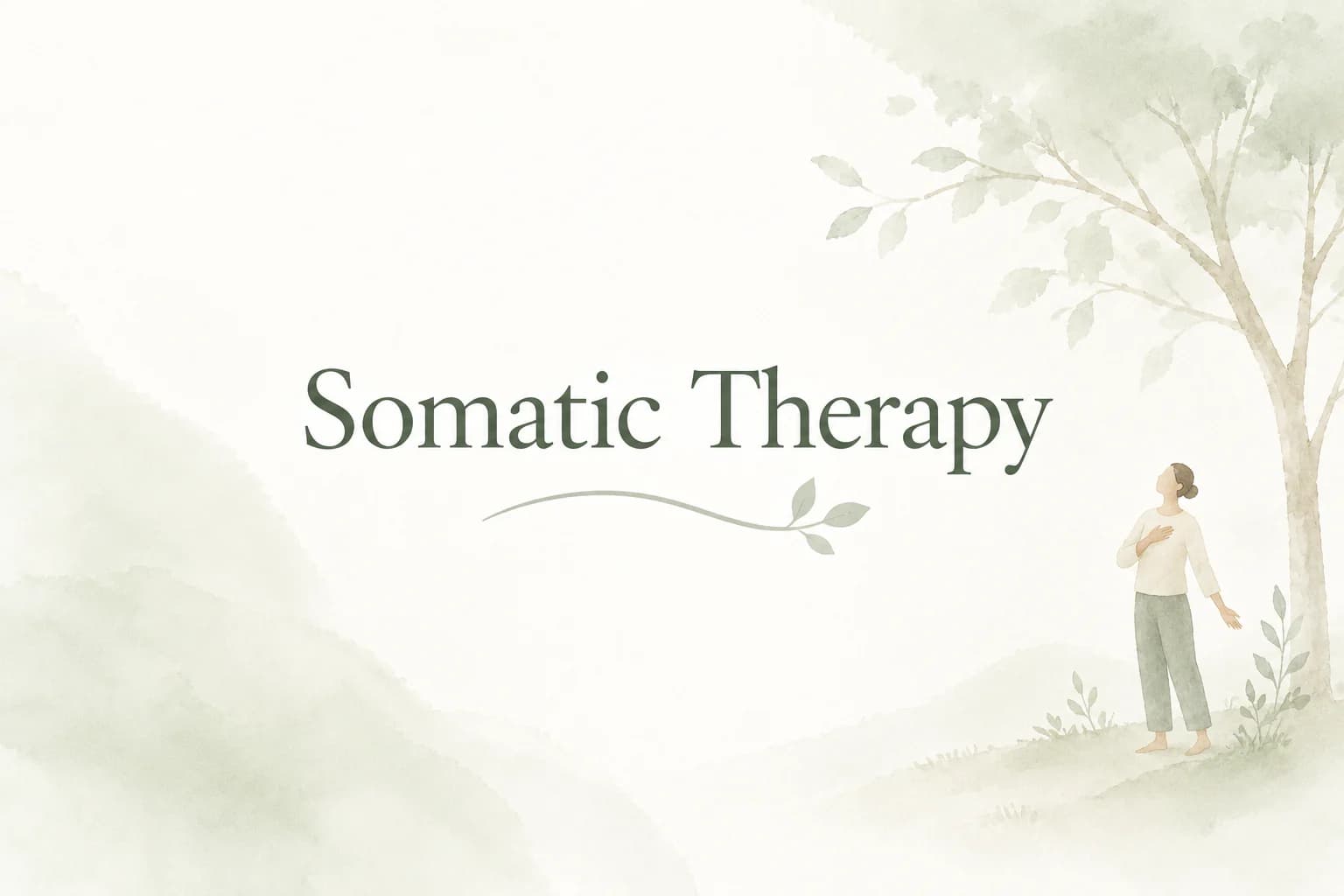
What Is Somatic Therapy? How Healing Happens Through the Body
You can understand your pain completely and still feel it in your body.
You know why you get anxious. You can explain it clearly. And yet your shoulders still climb toward your ears, your chest still tightens, your stomach still knots. That is not a failure of understanding. It is a sign that some of what you are carrying lives in your body, not just your mind. Somatic therapy is a way of working with exactly that.
What somatic therapy is
Somatic simply means "of the body." So somatic therapy is trauma work that includes the body, rather than staying only in conversation. Instead of only talking about what happened, we gently pay attention to what is happening inside you right now, the tension, the numbness, the held breath, the flutter of anxiety, and we help your body slowly release what it has been holding, sometimes for years.
Why the body holds on
Here is a picture that helps. When a gazelle escapes a predator in the wild, it does something remarkable. Once it is safe, it trembles and shakes, discharging all that survival energy, and then it goes back to grazing as if nothing happened. Its body completes the stress cycle.
Humans often do not get to do that. When something overwhelming happens, we freeze, brace, or push through, and that survival energy gets stuck in the body with nowhere to go. Years later it is still there, showing up as tension, exhaustion, anxiety, or a nervous system that never quite feels safe. Somatic therapy helps your body finally do what the gazelle did, complete the cycle and let the old energy move through and out.
When we use it
Somatic work can help when anxiety lives in your body, when you feel stuck in fight, flight, or shutdown, when talking has taken you as far as it can, or when you feel disconnected from yourself and your own sensations. It is often used alongside other approaches like EMDR and brainspotting, and it works well as a foundation, since learning to feel safe in your body makes every other kind of healing possible.

What it looks like in a session
It is gentler and less strange than people expect. There is no pushing, and you stay in control the whole time.
We might slow right down and notice where a feeling sits in your body. I might invite you to soften a clenched jaw, feel your feet on the floor, follow your breath, or notice a small urge to move, stretch, or push, and let your body follow it. Sometimes we simply track a sensation as it shifts and settles. Much of the work is quiet noticing, and it always happens at a pace that feels safe.
How it works online
A question I hear often is whether somatic therapy can really work over video. It can, and for some people it works even better.
Everything we do is about noticing your own body, and your body comes with you wherever you are. Over video I guide you to feel your feet on the floor, sense your breath, notice the chair supporting you, or look slowly around your room to remind your system it is safe. Many people find they can drop in more deeply from the comfort of their own home, in their own space, with a cup of tea nearby. You do not need anything special, just a quiet spot where you will not be interrupted.
How it fits into the flow of therapy
Somatic work usually is not a separate thing bolted on. It weaves through the whole journey. Early on, we use it to build safety and steadiness, teaching your body simple ways to settle. As we go deeper, it helps us process what comes up without becoming overwhelmed, since we can always return to the body to ground. And it threads naturally through other methods, so an EMDR or brainspotting session often includes somatic awareness too. Think of it less as one technique and more as the ground the rest of the work stands on.
What the research says
Somatic work is a growing field, and the early evidence is encouraging. In one randomized controlled trial, people with post traumatic stress who received somatic sessions showed a meaningful drop in symptoms compared with those who did not. Further studies are looking at how it helps across different groups and settings. As with any newer approach, more large trials are still needed, but what we have so far, alongside what I see in my own room, points in a hopeful direction.
If this sounds like you
You do not need to be good at "feeling your body" to begin. Most people start out quite disconnected from it, and learning to reconnect gently is part of the healing itself.