Trauma & healing
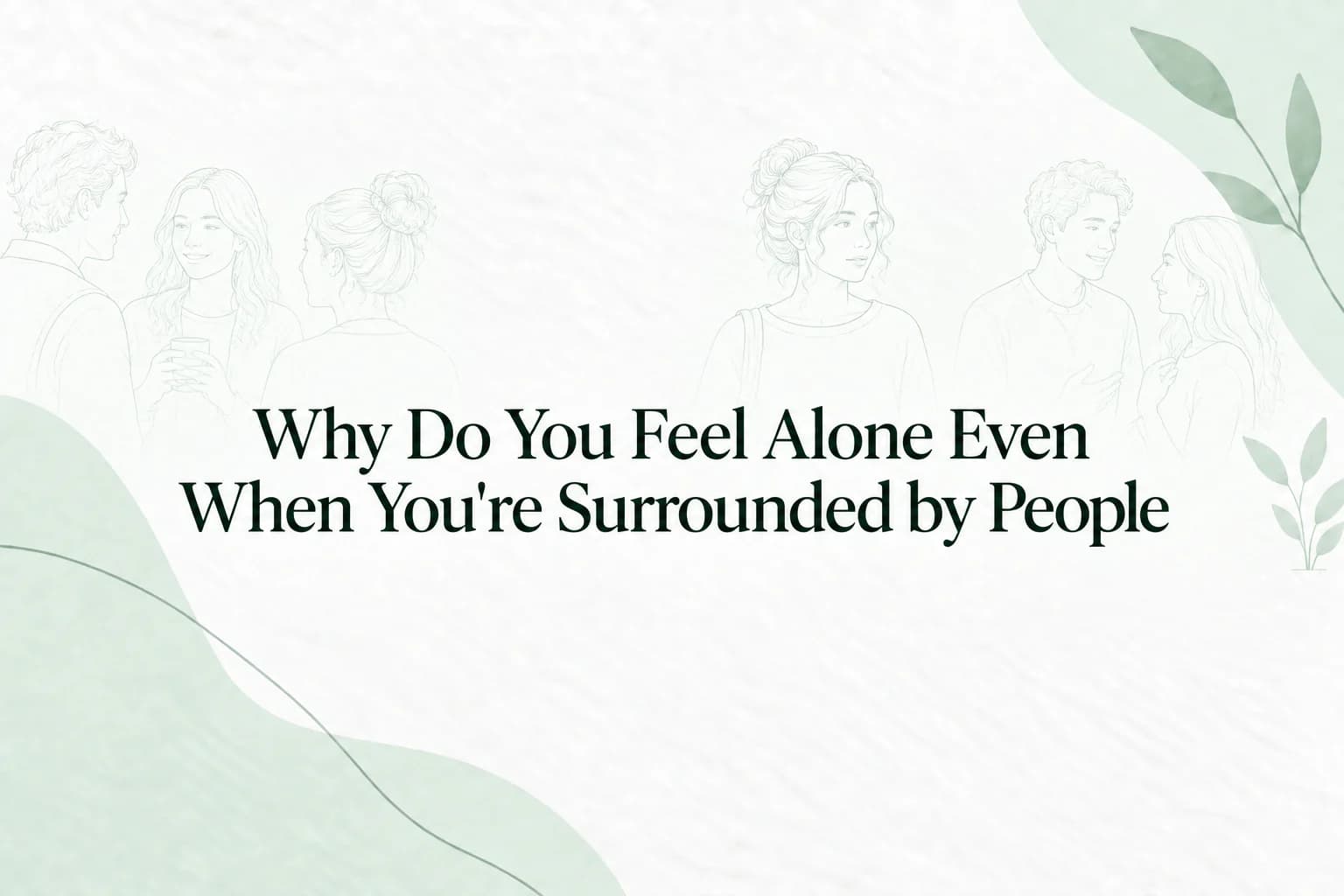
Why You Can Feel Alone Even When You're Surrounded by People
You are out with your friends. Everyone is laughing, the night is going well, and from the outside you look completely at ease. You are laughing too. You are saying the right things. But somewhere underneath it, there is this quiet feeling that you are not really there. Like you are watching yourself be social, going along with it, but not actually connected to yourself at all.
And here is the strange part. You are surrounded by people, but you still feel a little lost. Because if someone stopped and asked you what you actually think, or what you really like, you are not sure you could answer honestly. You have gotten so used to going along with what everyone else likes, because it helps you fit in, that you have kind of lost track of what is yours.
If that feeling is familiar, I want you to know it is more common than you think, and there is nothing wrong with you. Let me explain what is really going on.
Fitting in is not the same as belonging
There is a big difference between fitting in and belonging, even though they can look the same from the outside.
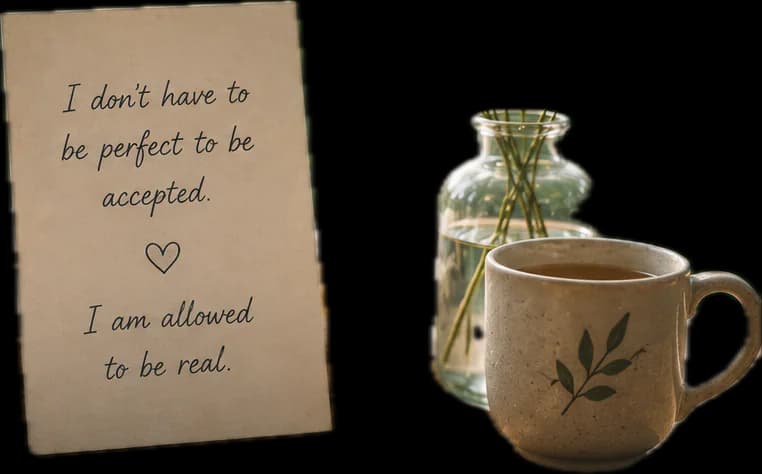
Fitting in is changing yourself to match the people around you. Watching what they like, agreeing with them, shaping yourself to blend in so you are accepted. Belonging is being accepted as you actually are, without having to perform.
A lot of us learned to fit in so early and so well that we never really got to belong. And you can be in a room full of people who like you, and still feel alone, because deep down you know they like the version of you that you are performing, not the real one underneath. That gap is what makes it feel lonely, even in good company.
You borrow other people's likes
This is why so many people end up not knowing what they actually enjoy.
When fitting in becomes your main way of feeling safe, you slowly start borrowing your opinions, your taste, even your interests from the people around you. You like what they like. You laugh at what they laugh at. You have a view, but really it is their view. Not because you are fake, but because agreeing keeps you connected, and standing out feels risky.
The problem is, after years of this, you genuinely cannot tell where they end and you begin. Someone asks what music you love, or what you want to do this weekend, and your mind just goes quiet, because you have spent so long tuned into everyone else that you stopped tuning into yourself.
Where this comes from
This usually starts long before the friendships you have now.
If somewhere in growing up you learned that being fully yourself was too much, or not welcome, or that love came easier when you were agreeable and easygoing, you adapted. You became good at reading people and becoming whoever kept things smooth. It was smart. It kept you safe and accepted back then.
But that same habit followed you into adulthood. So now, without even meaning to, you keep scanning every room for who you need to be, instead of just being yourself. Your radar for other people got strong, and your sense of your own self stayed quiet.
The quiet loneliness of it
What makes this so hard is that no one can see it. On the outside you look fine, social, easy to be around, always up for whatever. So people would never guess that you often feel disconnected and alone in the middle of it all.
And it is a strange kind of loneliness, because it is not about being without people. It is about being without yourself. About losing the person who is supposed to be with you through all of it. That is what makes it so quietly painful, even on a fun night out.
So what does healing look like
Here is the hopeful part, and it is gentler than you might think.
Coming back to yourself does not mean suddenly becoming loud, or different, or dramatically changing your friendships. It means slowly rebuilding your connection to your own self, one small honest moment at a time.
It starts with tiny questions when the pressure is off, when you are on your own. Do I actually like this, or am I just used to it? If no one was watching, what would I want to do right now? What music do I put on when I am completely alone? These small answers are where the real you starts to come back into focus.
Then it is about letting little bits of the real you show, in safe moments. Saying you would prefer a different place to eat. Admitting you did not love a film everyone else raved about. Having a small opinion and letting it be heard. Each time you do this and the world does not end, and your friends do not leave, your body learns something new. That you are allowed to be yourself and still belong.
It also helps to notice the difference between the friendships where you perform and the ones where you can breathe. You do not have to leave anyone. But start paying attention to who you feel most yourself around, and lean gently toward those people. Real belonging grows in the spaces where you do not have to shape-shift.
And be kind to yourself through it. The part of you that learned to fit in was never doing something wrong. It was keeping you safe and connected the only way it knew how. You are just learning, slowly, that you no longer have to disappear to be liked.
People tell me the small signs first. They said what they really wanted for once. They sat with friends and actually felt present, not performing. They noticed a genuine opinion forming and let themselves have it. That is what coming home to yourself looks like. Ordinary, quiet, and real.
If this is you
You are not fake, and you are not broken. You are someone who learned to fit in so well that you slowly lost touch with yourself. But that self is still there, underneath all the fitting in.
You do not have to keep performing to belong. And the more you let the real you show, even in small ways, the less alone you will feel, even in a crowded room.